
 EN
EN
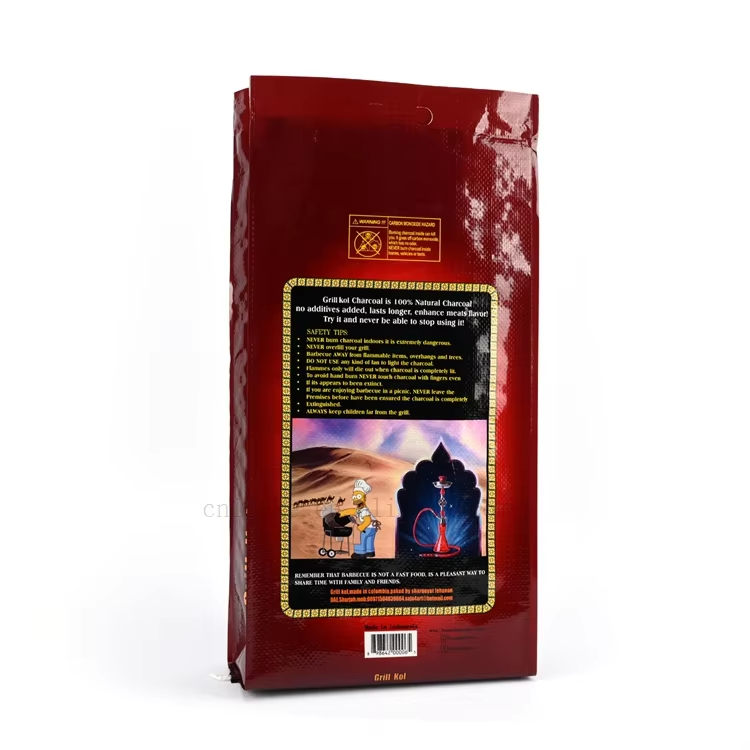
How the Packaging of Conventional Grill Charcoal Bags Damages the Environment
The box of a typical grill charcoal bag has a stacked multilayered packaging structure, and it presents a multi-dimensional environmental challenge that stretches beyond the barbecuing. Due to a combination of plastic films, chemistries of foil layers, and a chemical lining, these bags are virtually unrecyclable. Thus, it is estimated that 80% of these bags are sent to a landfill, leaching microplastics into the ground and underground waterways while burrowing into the ground for eons.
This kind of damage accrues long before the bags are tossed away. The plug for plastic is a contributing climate change factor due to the production of the bags. There are greenhouse gas emissions of about 40% for charcoal when compared to the use of reprocessed materials, and the use of bags also provides a climate change alternative. Procrastinating disposal has become commonplace for charcoal. This has become a drawback for nature. The bags provide a temporary resting space for the wildlife while the gods of the ecosystem eat, entangle, and injure wildlife. Microplastics are things that will never degrade. The materials emitting about 5.2 million metric tons of CO2-equivalent emissions are all used to produce these bags.
This is a really tragic use take basically use and disposal of take lighting bags. The simplifying of wasted and polluted resources is the most eco-friendly way to stretch a resource to the max.
Environmental Impact Stage Key Consequences
Production More greenhouse gas (GHG) emissions by 40% for Virgin charcoal bags vs. reprocessed materials
Usage & Disposal 80% landfill room; microplastics, and wildlife/bag barriers
End-of-Life Centuries-long; microplastics and Contaminating
It is critical that these designs undergo change for the sake of the ecosystem. Research has given us many directions. The emissions goal needs material changes. The only way to achieve this goal is to educate the consumers. This problem is the only reason people are free to take the bag to the camp.
Circular Grilling Solutions & the Recyclable Charcoal Bags
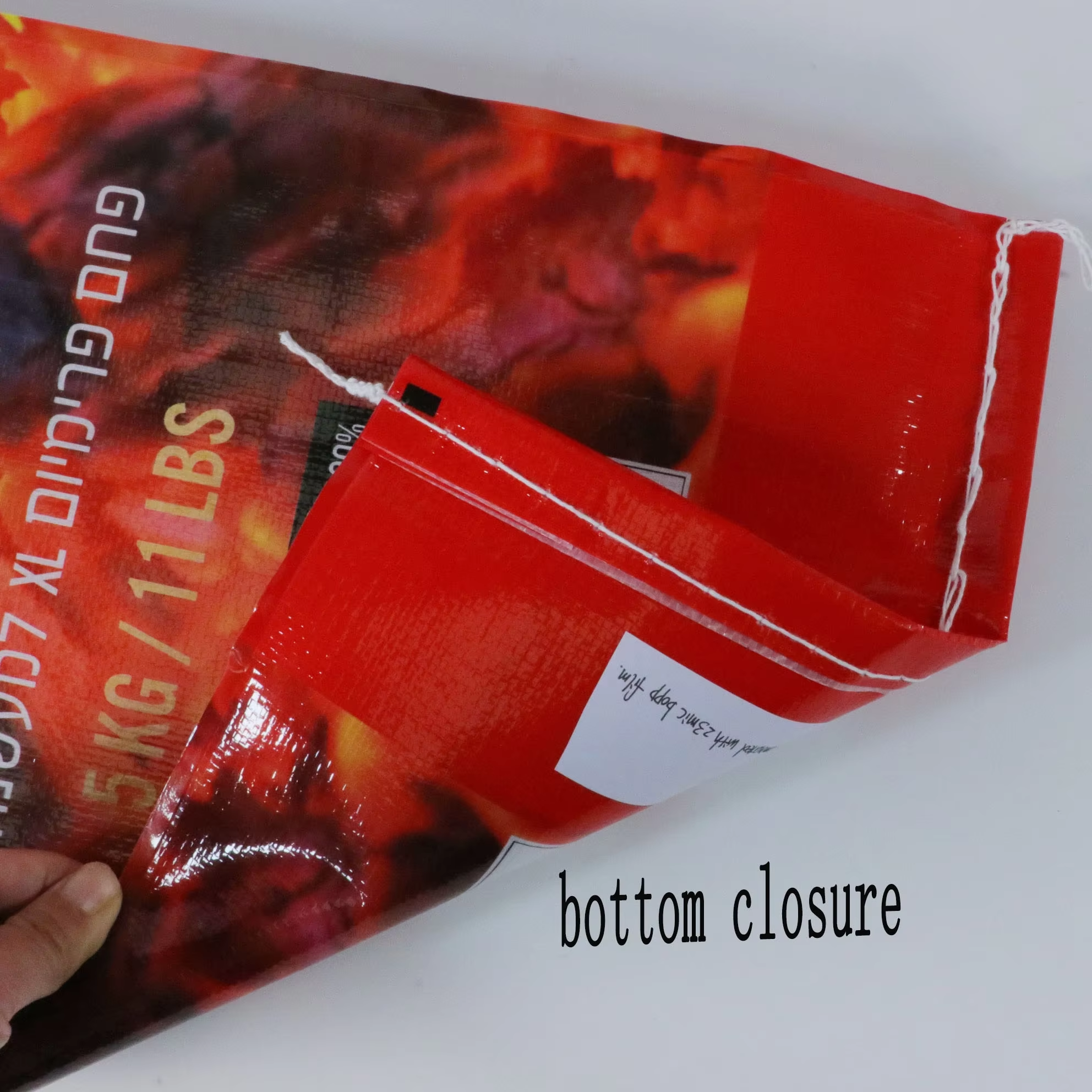
Grilling now has recycling in the loop as the purpose of the new recyclable grill charcoal bags is to convert packaging into a production input rather than a waste mound that fills a landfill.
Alternative Innovations: Recycled Post-Consumer Plastic Grills, Charcoal Bag Paper Laminates & Mono-Material Design
Being constructed with paper-laminates with the possibility of composting, the new designs include all of the structural plastic-components that a design needs. The designs mostly use paper-laminates that offer a compostable option. While structures with all mono-material components of polyethylene offer less of a recycling challenge. This is due to recent construction of recycling facilities that process polyethylene, that isolates the streams, to now being able to process almost 80% of the polyethylene to the waste stream.
Certifications & Real-World “Recyclability” to the Facilities’ Closure of the Recycling Grilling & the Types of Recycling Grilling
Real-world outcomes are the result of designs with certifications. The How2Recycle label and the APR provide instructions and validation of design compatibility, respectively, to the public. Unfortunately, the recycling facilities are not all the same and almost 40% of the US’s waste stream’s film plastics. To be able to ensure the closed loop for your grill charcoal bag, przed the products that comply with the APR standards and the local, accepted verifications as a means of checking the municipal records.
Integrating Recyclable Grill Charcoal Bags into a Broader Green Grilling Strategy
When combined with other eco-conscious strategies, recyclable packaging engages consumers beyond a quick-win dimension, illustrating a deep commitment.
Sustainable Packaging in combination with Eco-friendly Fuel Charcoal and responsible charcoal
Let’s consider options in grams of CO2 emitted per kg of gas fuel: lump charcoal contains no binders or additives, and emits 30% less CO2 when combusted as opposed to traditional briquettes, which are more fast burning and sticky in consistency. Instead of the petroleum lighter fuel methods to light your charcoal in the grill, which act as the VOCs, an electric bush lighter or a charcoal chimney will create an 80% VOCs reduction. Finally, for ethically responsible charcoal, look for charcoal with the FSC or PEFC certification of Responsible Forestry/Endorsed Forestry, respectively. From their Responsible Forestry/Endorsed Forestry certifications, they take the highest level of commitment to ensure steadfastness in the chain of control. As fast burning and sticky as traditional briquettes, yet with no binders or additives, charcoal of briquettes providing air to the grill and sustaining the reversible lock technology of a low emission fuel charcoal. These recyclable packaging, low emission fuels, and low em emissions、
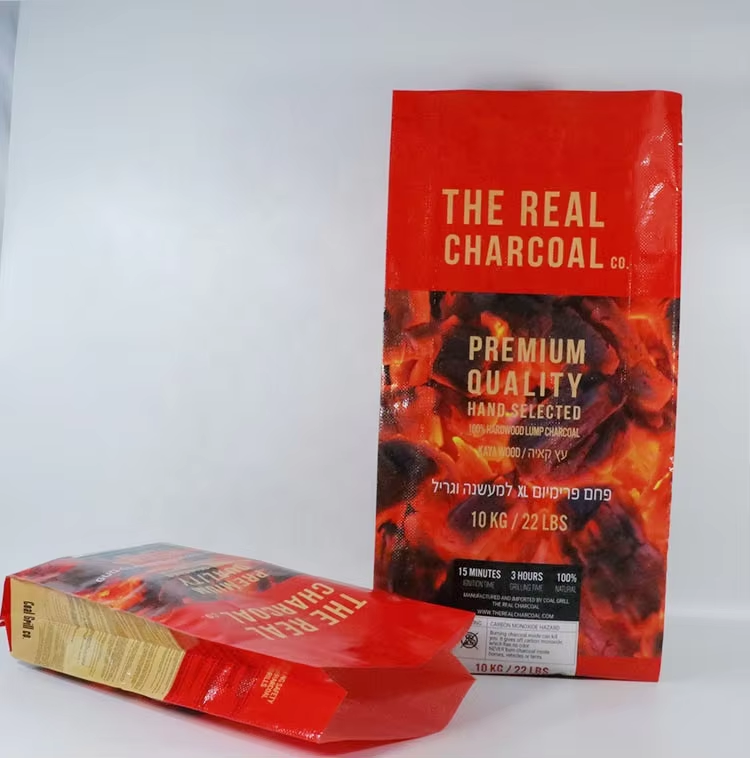
Ushering consumers to engage: A few steps to maximize the Grill Charcoal Bag Recyclability
Proper recycling starts with you, the ultimate owner of an appliance, and whether you ensure compliance to recycling rules of a grill charcoal bag.
Sorting, Rinsing, and Confirming Local Acceptance of Grill Charcoal Bags
First, bags need to be sorted by material, with paper-laminated bags and mono-material plastic bags being kept separate to ensure cross-contamination doesn’t happen. Charcoal dust in bags is there to stay, and removes the bag from the list of recyclable items. Charcoal dust contamination is said to cause a 32% rejection rate in recyclable packaging (2024 Waste Audit Study). Next, check to see if your bags are accepted by your municipality. For instance, only 55% of polypropylene bags are accepted by the recycling plants in the U.S. if steps are followed, your grill charcoal bags can fulfill a function in circular grilling solution systems rather than just closing the loop.
Frequently Asked Questions
What makes this type of grill charcoal bags a danger to the environment?
These bags are often a melding of plastic film and a chemical liner, thus cannot be recycled. These bags contribute to the endangerment of wildlife, landfill waste, and a new phenomenon: microplastic pollution.
What are the benefits to a grill charcoal bag that is recyclable?
The bags that are almost usually recyclable are made of mono-material Ionic-resistant film, paper-laminates, and PCR plastics. These bags allow recycling plants to process waste more efficiently.
When looking for grill charcoal bags that are recyclable, what certifications are a must?
How2Recycle certification and APR certification should be sought for recycling bags, and check to see if the certifications are recognized by your municipality.
What can I do that is great for the environment in the practice of grilling?
Clean ignition practices and the use of charcoal that is lump, and/or ethically sourced (such as certifications from FSC or PEFC) are practice for the environment.
How can I recycle my bags and know that my recycling will be accepted?
Rinsing the bags and separating them by type is important to ensure acceptance. Also, you need to determine if your bags are accepted by your municipality.