
 EN
EN
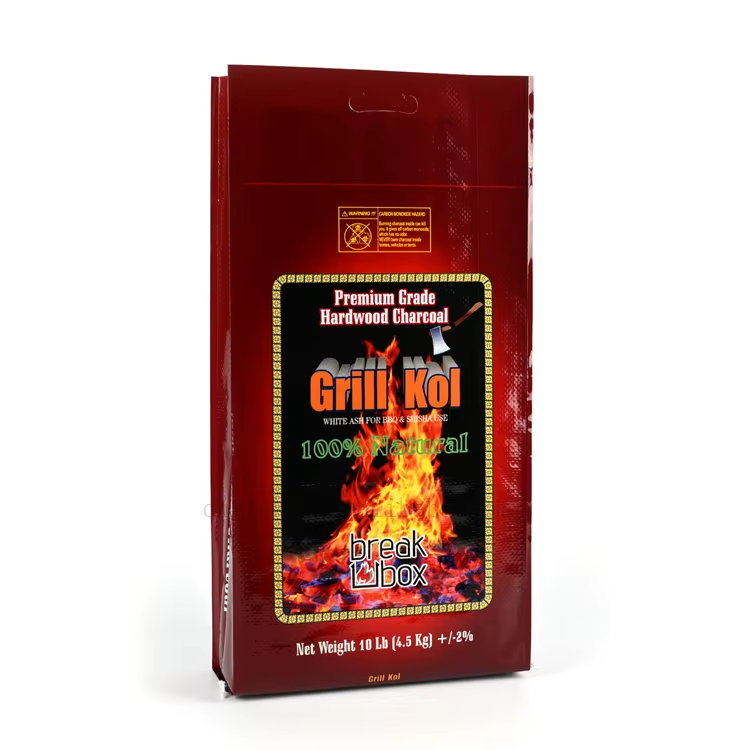
The environmental issues arising from conventional grill charcoal bags.
Charcoal bags for grills contribute to a number of environmental problems in all stages of their life cycle. Most of them are wrapped in non-recyclable plastic layers which results in 90% of bags sitting in landfills for hundreds of years in landfills. The Environmental Protection Agency estimates that 200,000+ tons of plastic waste are generated from these bags in the United States every year. The production of these bags requires the extraction and refinement of oil and gas, which results in a ~34% higher carbon footprint compared to the bags that could have been produced from recycled materials (Carbon Trust, 2024). The wood cutting in the production process is also damaging. As the charcoal production cycle continues, the immediate forests are cleared and the production teams are required to travel more than 300 km to source new forests. The burning of charcoal is also damaging. It releases harmful chemicals into the atmosphere and the remnants of lighter fluid that are used to initiate combustion are harmful to the soil. The overall result is that there is little to no sustainability in the entire process from the production of charcoal to the packaging of bags. However, if companies are willing to change to more recyclable and biodegradable packaging bags, many of these issues can be resolved.
The Impact of Charcoal Bags on Waste Levels and Carbon Footprint
62% Less Waste in Landfills: EPA Study on Charcoal Bags
When consumers change their habits and purchasing decisions to include recyclable grill charcoal bags, EPA estimates landfill waste is reduced by 62%. This stems primarily from the elimination of the plastic laminates that are as difficult to recycle as they are to landfill. Conventional charcoal bags contain several layers. The new bags are made of single constituent materials such as plain or coated kraft paper. As a result, they do not disrupt the paper recycling stream. As a result, the bags are designed to mill and recycle without adding new phases. Instead of centuries of waiting, the organic elements within the packaging are decomposed without the plastic, and the landfill no longer sits as a rot that leaves the organic to undergo aerobic decomposition. The remains of the landfill contribute to methane production, a potent greenhouse gas.
Because proper disposal transforms trash into something useful again, the bags will still retain their moisture barrier, still shelf life, and still store shelf life.
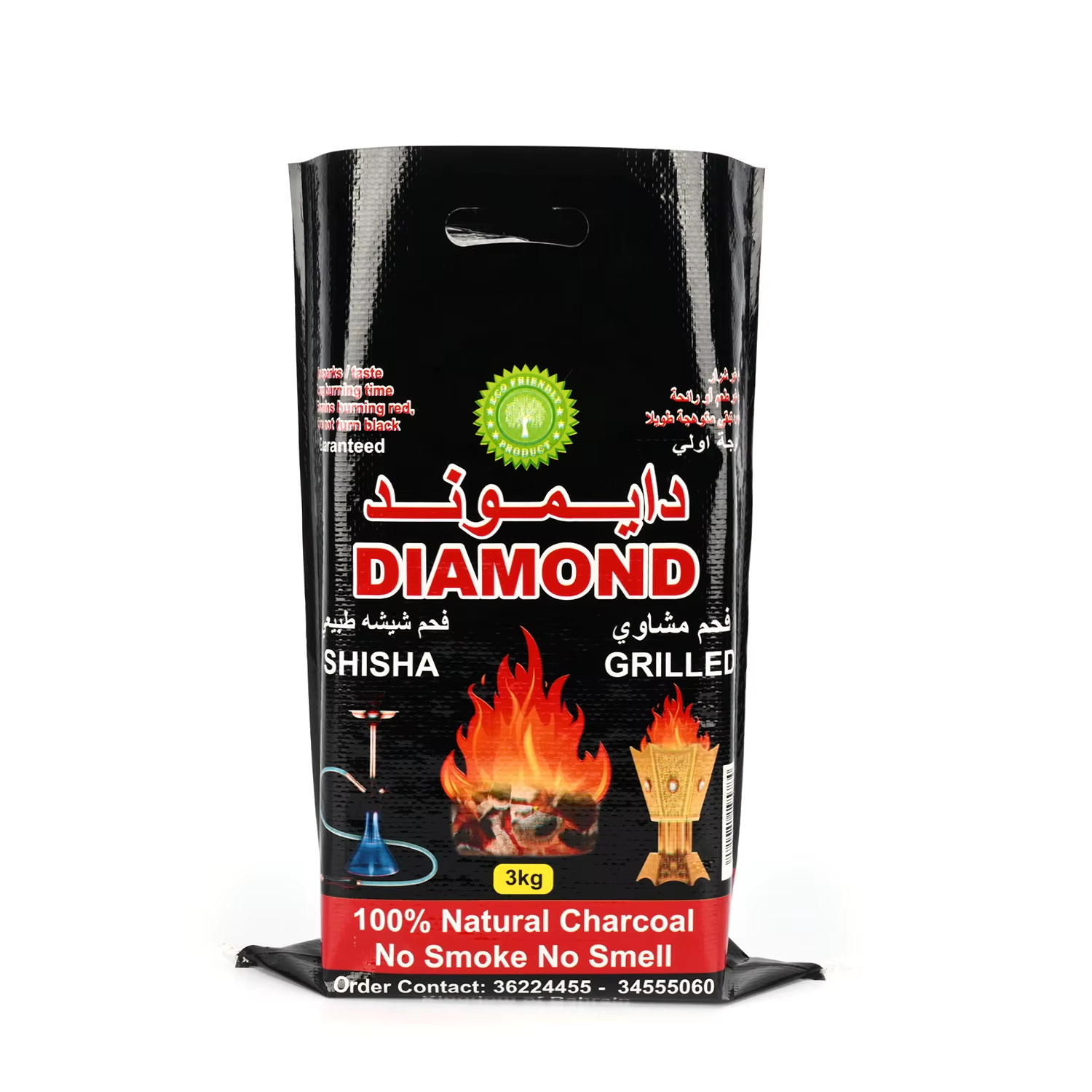
34% improved CO2 emissions versus virgin-plastic alternatives (Carbon Trust, 2024)
Carbon Trust has projected for 2024 that reusable grill charcoal bags can reduce CO2 emissions by 34% compared to conventional plastic grill charcoal bags. Why? There are three reasons for this positive impact. First, the energy consumption for the production of reusable grill charcoal bags is 50% less than that of conventional plastic bags. Second, petroleum is not used to make this product, and, third, the weight of reusable grill charcoal bags is less than conventional plastic bags, so their transport contributes less to fuel consumption during transport. However, the most important issue is that the bags can be effectively recycled, and the raw materials that make up the bags can be recycled several times without their quality deteriorating, in unlike the plastic, which is usually recycled only once or twice. The reusable bags can reduce the CO2 emissions of conventional plastic bags by at least 2.1 kilograms. When this positive impact is scaled up to the entire market, it is clear that reusable grill charcoal bags are playing a vital role in providing people with a focus on more sustainable alternatives.
Designing Charcoal Bags for Recyclability and Functionality
Moisture resistant and resealable, with no plastic lamination
Grill bags that can be recycled have the same performance as non-recyclable bags, and don’t have the same plastic, so don’t have polyethylene layers. The new bags use water-based coatings that are food-safe, and can keep the internal humidity at 85% so the charcoal stays dry. The special bags can be sealed to be resealed again, and the majority of people want to do this as people only want to open part of the pack at once. The bags are also fully recyclable as there is no use of polyethylene and proper adhesion of the glue. All the testing have been shown to be true.
Curbside recycling systems for paper have been seamless.
These high performance bags have shown that sustainability can be designed without compromising usability and recyclability.
Dual Material Innovation: FSC-Certified Kraft Paper + Certified Compostable Liners
The best in eco-friendly packaging now combines FSC-certified kraft paper and compostable liners that are TÜV certified, made from PLA (polylactic acid), or corn starch. Kraft paper is a durable material that withstands the rigors of shipping and handling, as well as rough treatment during transit. Liners contain some charcoal powder that improves some of the liners characteristics, but doesn’t impact the end-of-life cycle of the product. Since the different parts of the packaging can be separated, waste management facilities and consumers can easily interface with the packaging to sort them for the appropriate recycling or composting stream.
The paper component can be placed in standard curbside recycling. The compostable liner will break down fully in a composting facility in 12 weeks.
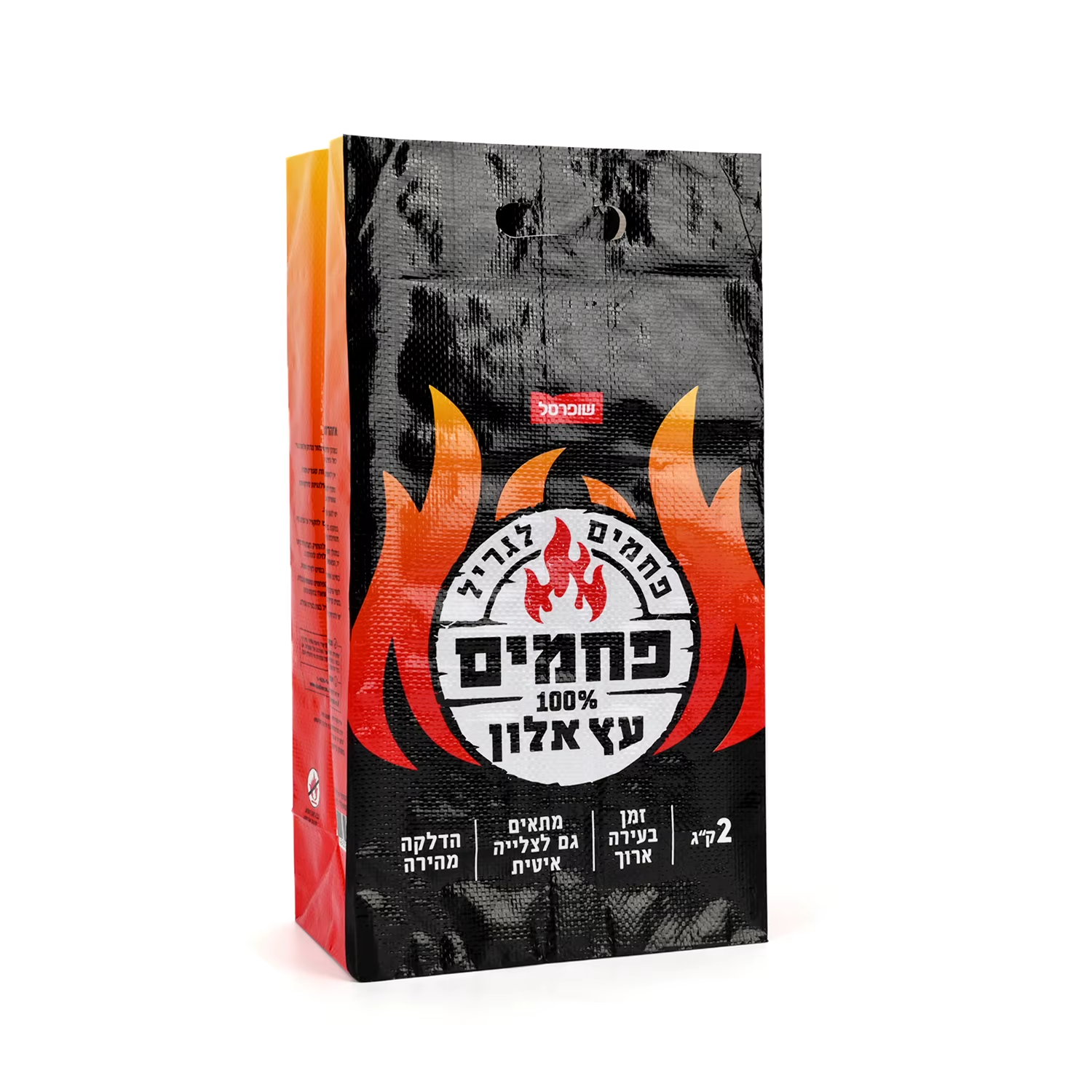
The upstream carbon impact is reduced through renewable sourcing.
91% faster degradation than a conventional plastic alternative on the market is the result of independent research on this modular design and puts to rest the durability versus circularity debate.
Common Questions
What about regular grill charcoal bags is an environmental issue?
Regular grill charcoal bags have environmental issues because they have a lot of layers of plastic - which is non-recyclable - resulting in increasing the amount of waste in landfills. Making these bags also produces a lot of carbon emissions, and when they are burned or thrown away, they pollute the air and soil.
What is the Environmental impact of using recyclable grill charcoal bags?
Using recyclable grill charcoal bags improves the environment because it helps reduces landfill waste by about 62%, reduces carbon emissions by 34% and the materials compost naturally while the regular grill charcoal bags do not. They are also made of renewable materials and can be recycled along with the paper in a mixed paper recycling system.
Are recyclable grill charcoal bags just as durable and convenient as the non-recyclable bags?
Yes. Recyclable grill charcoal bags are made to be just as durable and convenient as non-recyclable bags. They are made with a dual layer material that helps to make them moisture resistant, and keeps the charcoal fresh. This also means they can be used in humid conditions without having their moisture resistant properties lose their effectiveness.